In March of 1924, a man named J. Sherman Douglass sat down to write a letter to the editor of the Bar Harbor Times. A recent issue had carried an article and a poem about old Bar Harbor by a Mrs. Smith and a Miss Jennie Lynam, and the piece had brought back to mind, he wrote, "the tragedy of Newport Mountain of long ago, almost forgotten now but which at that time was an awful thing to happen in that quiet little fishing village." He could no longer fix the date with certainty — "the story told to me by my father left a very strong impression on my mind, but the years have gone by and I have forgotten" — only that it must have been "just previous to the civil war." His aunt, Lucretia Kenny Douglass, had been a girl. The stone in the Mount Desert Street Cemetery records that she was twelve years old, and that she had died on the third of August, 1853.
She lies in the family plot with her parents, her sister-in-law, and three of her nieces and nephews — seven Douglasses in all. Her brother, J. Sherman's father, who carried the story west and passed it down to the son who wrote it down, lies in Colorado.
The Reverend from Scotland
The father of the family was William Stuart Douglass, born on the 12th of December, 1799, in Montrose, in Angus, on the eastern coast of Scotland. He came across the Atlantic and across to the coast of Maine, and on the 8th of August, 1825, in Bucksport, he married Priscilla Bethiah Doane. The genealogical record names thirteen children of that marriage. Lucretia was among the youngest. Almost all of those children would scatter; only Lucretia and her parents would end in the plot at Mount Desert Street.
The Reverend William died on the 16th of June, 1882, in Eden — the town that would shortly afterward be renamed Bar Harbor — at the age of eighty-two. Priscilla, four years his junior, outlived him by five years. She died sometime in 1887; the exact day is not recorded on her stone.
Lucretia, and Newport Mountain
The story J. Sherman Douglass wrote down in 1924 is the fullest account we have of how his aunt died. He had it from his father — Lucretia's brother John — who had been a young man at the time and never forgot it.
It was, J. Sherman wrote, "one beautiful morning in blueberry time." The men and the boys were nearly all away fishing. A party of the women and girls had set out early for Newport Mountain — what is now called Champlain — to pick berries. Among them were two girls "about fourteen years of age" (the stone says Lucretia was twelve), "near neighbors at Cromwells Harbor": Almira Conners and Lucretia Douglass.
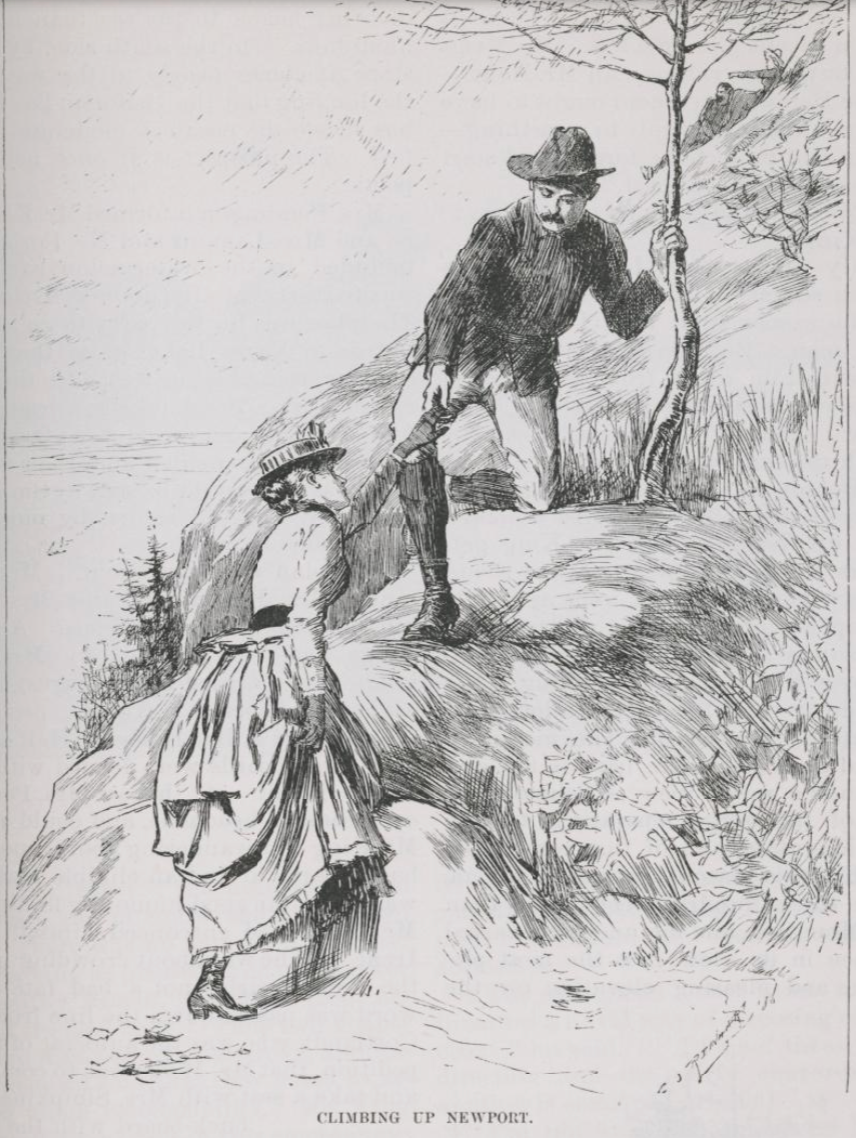
The party had eaten a late lunch and started for home when the two girls — whose pails were not as full as the rest of the party's, because they had talked too much to pick — asked whether they could stay a little longer. The older women demurred, but finally let them, with the condition that they keep to the path. The rest of the party went down.
Lucretia and Almira picked along the edge of a steep bluff. They saw, J. Sherman's letter records, "a beautiful bunch growing near the edge and both made a run for the spot. As they reached it an awful roar greeted their ears, and they both went off into space." Almira caught a tree limb in her fall, and survived with a broken arm and "some scars which she carried to the grave with her." Lucretia "went to the bottom of the cliff, and her life was crushed out by a large piece of falling rock."
When the girls did not return, a search party was raised. The men and women of the village went out into the dark with the few lanterns they could gather and lit fires on the mountain, but they could not find them. The search went on through the night.
At dawn, a man named Lynam — the father of the Jennie Lynam whose poem in the Times had occasioned the whole letter — set out from his house to mow a meadow at Schooner Head, while the dew was still on the grass. As he came near the place where his work was to begin, he heard faint cries. He laid down his scythe and went to find them. The cries grew fainter as he drew nearer, and finally ceased; but he had seen, by then, "an object like a body hanging in the tree." He could not reach her alone, and went home for help. Word of the missing girls had reached his house by the time he arrived. The men gathered ropes and ladders and went up the side of the mountain. Almira was rescued unconscious and carried home, where she recovered. They went then to get the other girl, "and had to pry the rock off her body."
Almira was not the only witness to what came next. She had been close enough to hear, all the long hours of the night, and she said afterwards that she had heard Lucretia until "sometime near morning, when she herself became unconscious." J. Sherman's letter sets it down without comment: "It was afterwards said that she did not die until nearly morning."
Almira lived. She married a man named Charles Higgins and bore a son who became Dr. Herbert Higgins. J. Sherman wrote that everyone who ever told the story of the rescue "always spoke of the splendid grit and courage" of Mr. Lynam, who must already have been an old man.
Margarette
Sometime after Lucretia's death — the record does not say when — her older brother John Huston Douglass married Margarette Higgins of Bar Harbor. She was born on the 12th of July, 1839, of one of the island's Higgins families. Their first child, Mary Alice, was born in 1877; by then Margarette was thirty-eight. Eight children would follow over the next decade. Five of them would survive their mother. Three of them would not.
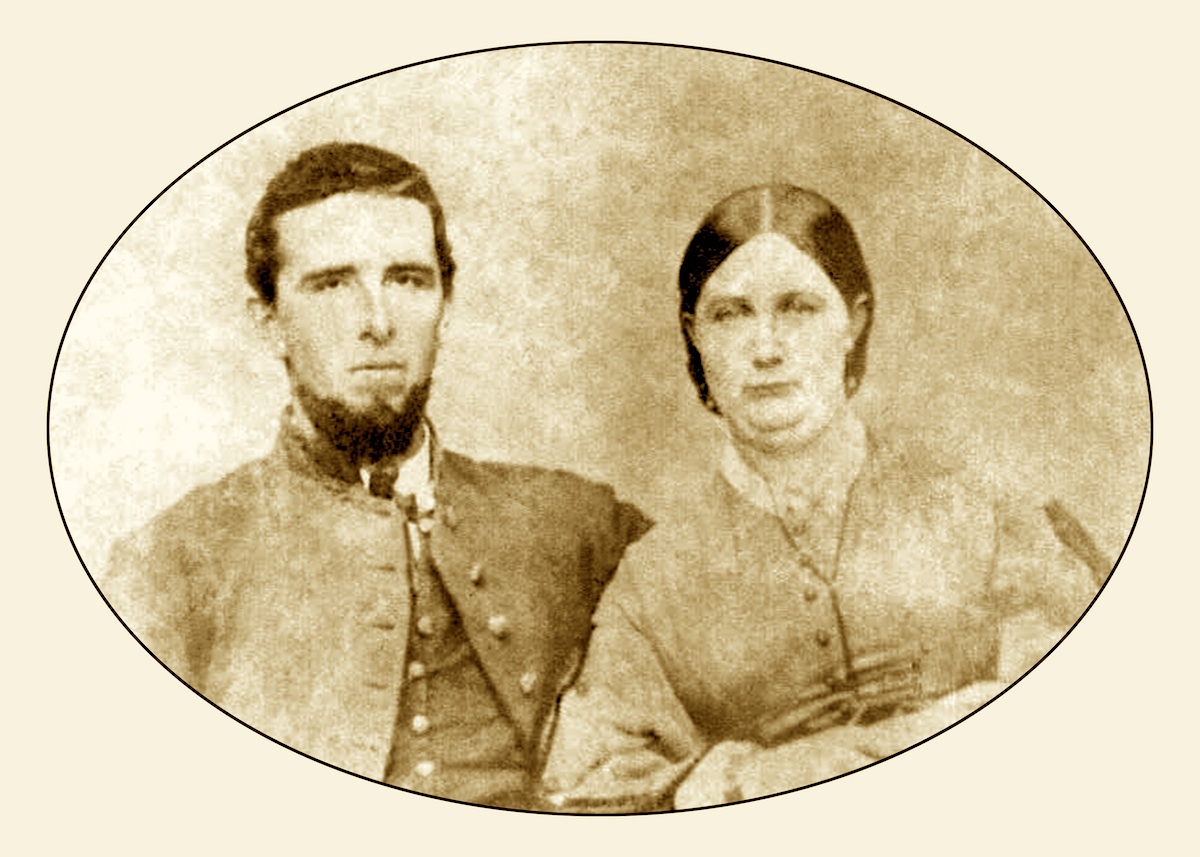
Margarette died on the 2nd of March, 1887, at the age of forty-seven. She had outlived three of her eight children and her father-in-law by five years, and would die in the same year as her mother-in-law.
Three small graves
Three children of John and Margarette lie in the plot.
Mary Alice, the eldest, was born in 1877. Howard Emery followed on the 30th of April, 1879. Howard died on the 12th of July, 1880, at fourteen months old. Just over three months after his death, on the 28th of October, 1880, Margarette gave birth to another son: Emory Woodman Douglass. The new baby carried his dead brother's first name forward, with the spelling shifted. He lived for nine months, and died on the 23rd of August, 1881. Four years later, in 1885, Mary Alice died at the age of seven or eight; the stone records only the years.
Between Howard's death in July 1880 and Margarette's death in March 1887 — a span of six and a half years — the Douglass family lost three children, the Reverend, and Margarette herself. Priscilla, the matriarch, died sometime in the same year as her daughter-in-law. Five members of the family were buried in the plot in those years.
The son who left
John Huston Douglass was the brother who carried the story of Lucretia's death down to the next generation. He had been a young man when she died — old enough to be told the details firsthand by those who saw them, young enough to remember them clearly for the rest of his life. He passed them to his eldest son, J. Sherman, who passed them in 1924 to the readers of the Bar Harbor Times.
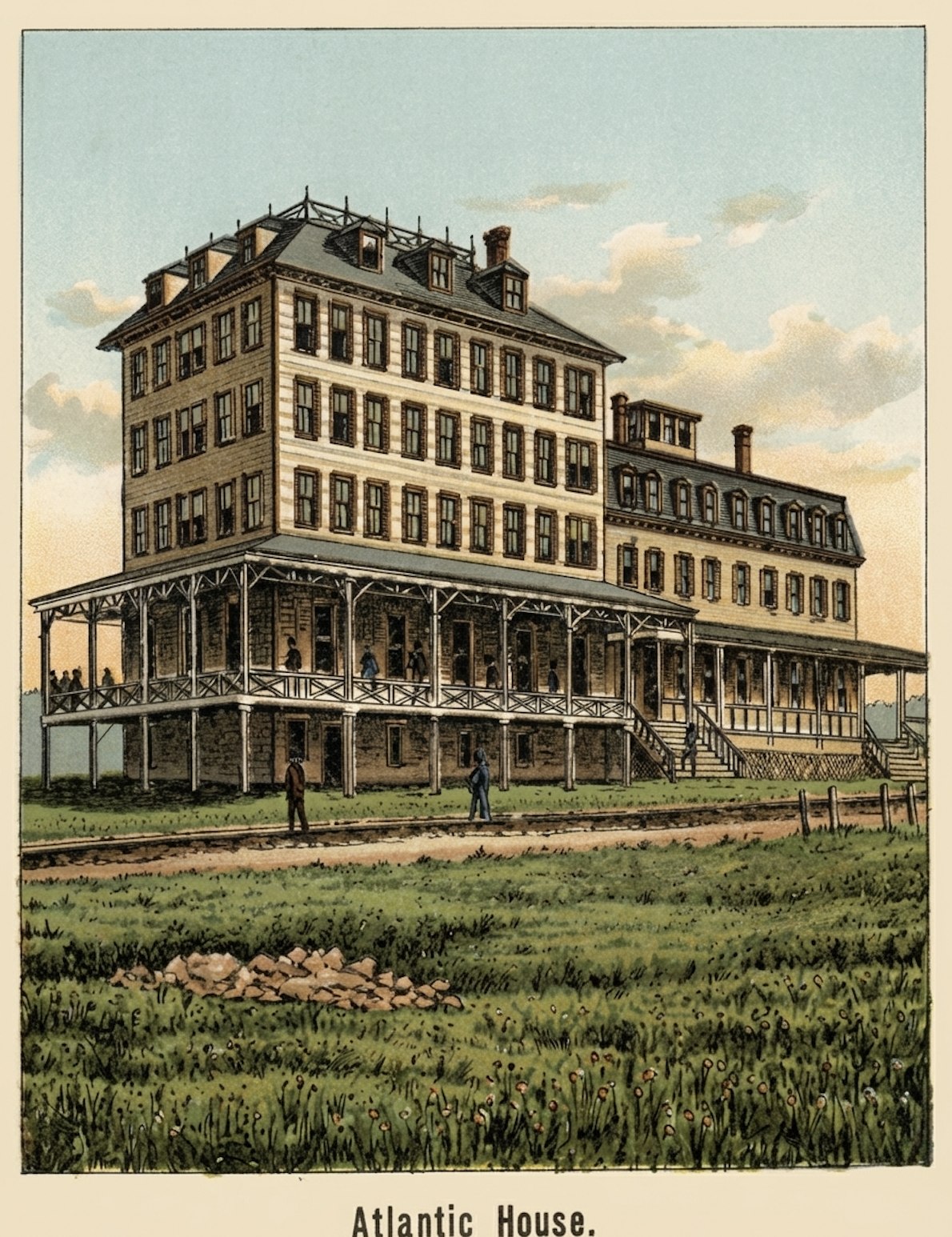
John was also, by the count of his obituary, "one of the pioneer hotel men of Bar Harbor." He kept for several years the old Atlantic house, which became in time the Louisburg hotel. After he left Bar Harbor he went to Marlboro and took up farming for a while. In 1906, at the age of about sixty-six, he moved his family across the country to Longmont, Colorado.
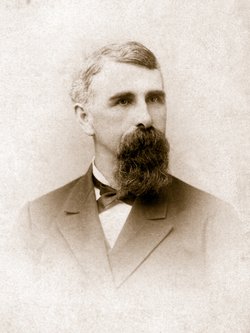
After Margarette died in 1887, he had married again — to a woman named Rena Anderson of Hancock. Two more sons followed, Roscoe and Stewart, born of the second marriage. By the time of John's death they were grown men of Longmont.
John died on the first of January, 1916, in Longmont, at the age of seventy-six. The notice that appeared in the Maine papers read:
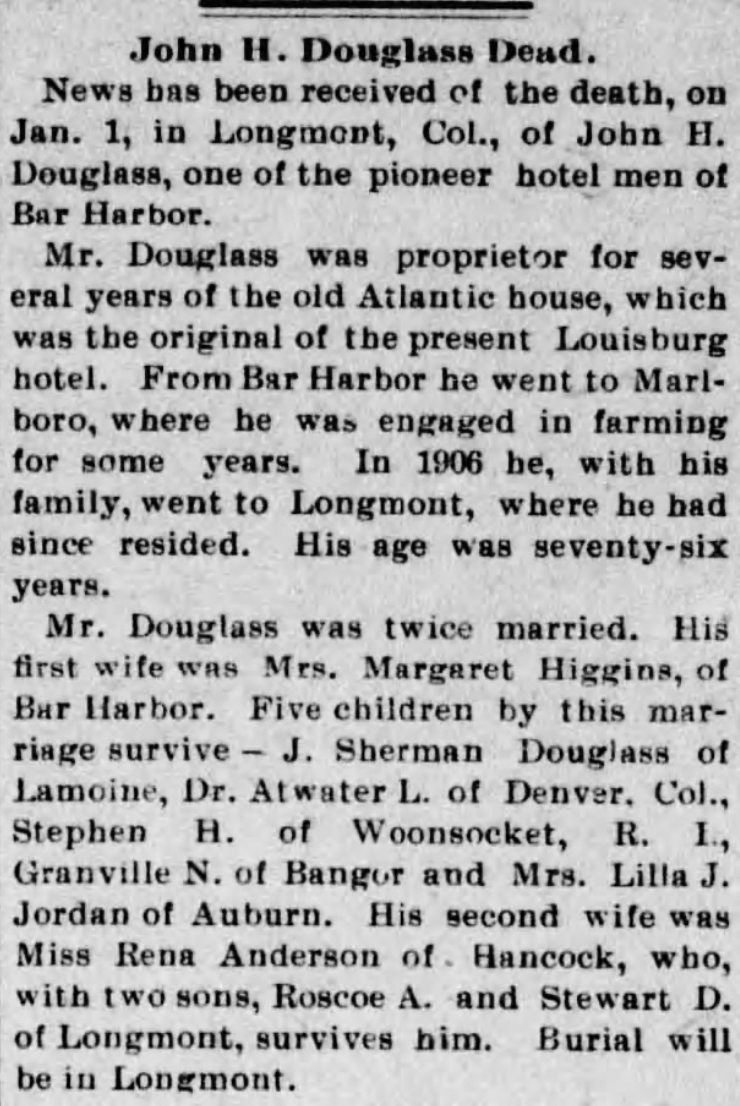
The notice named his five surviving children by Margarette: J. Sherman of Lamoine, who would write the Newport Mountain letter eight years later; Dr. Atwater L. of Denver; Stephen H. of Woonsocket, Rhode Island; Granville N. of Bangor; and Mrs. Lilla J. Jordan of Auburn. None of them had stayed in Bar Harbor. "Burial," the notice ended, "will be in Longmont."
Seven Douglasses lie in the plot at Mount Desert Street: a Scottish reverend and his Maine wife; their youngest daughter, Lucretia, who died on Newport Mountain at twelve; their daughter-in-law Margarette; and three of Margarette's eight children, who did not live to grow up. The son who connected almost all of them — John Huston Douglass, brother to Lucretia, husband to Margarette, father to the three small ones — went west to Colorado in 1906 and was buried in Longmont nine years later.
In March of 1924 his son sat down and wrote out what John had told him: that on a beautiful morning in blueberry time, sometime before the Civil War, two girls had gone up Newport Mountain. One of them had been his father's youngest sister. He sent the letter to the Bar Harbor Times. Seventy years had passed since the rock fell. Flowers, the records say, have been left at each of their graves.