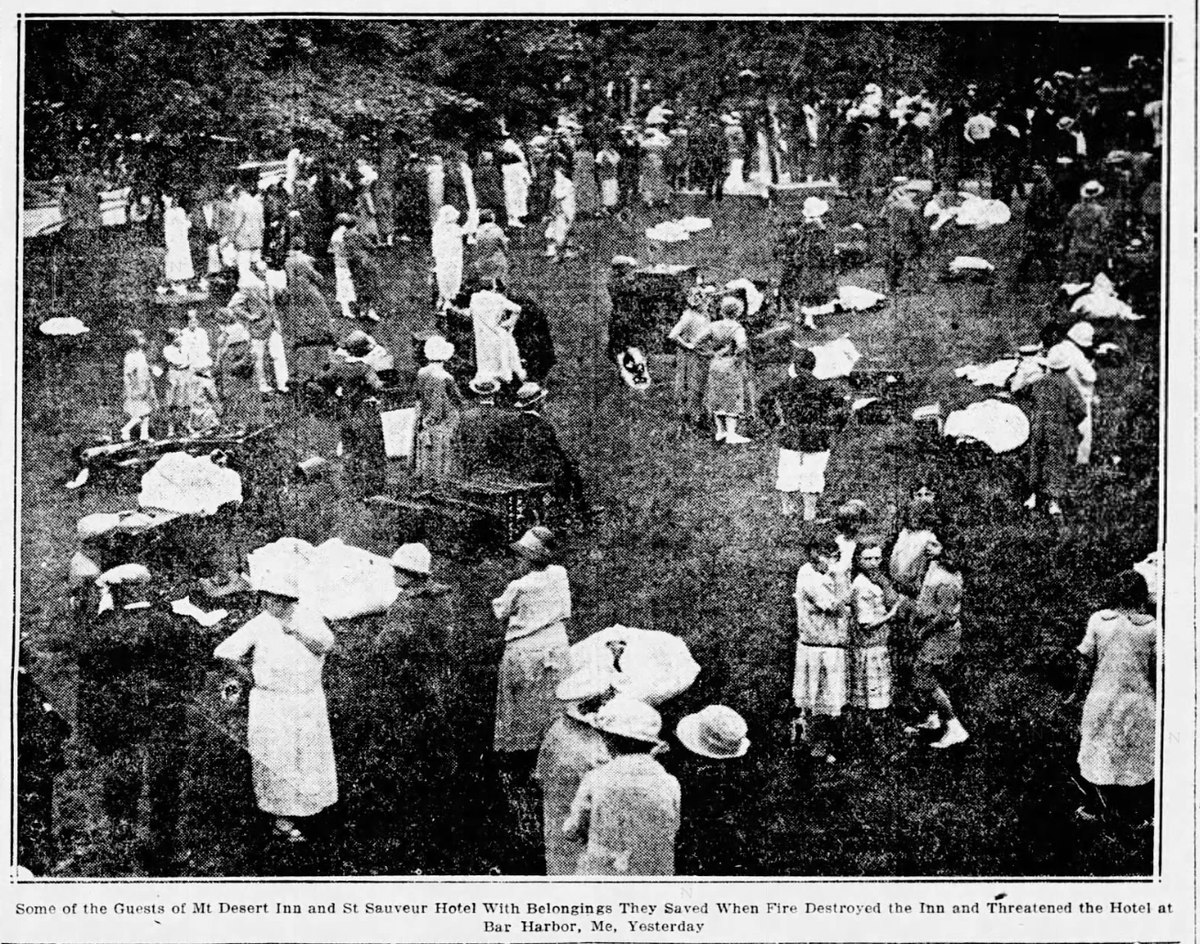
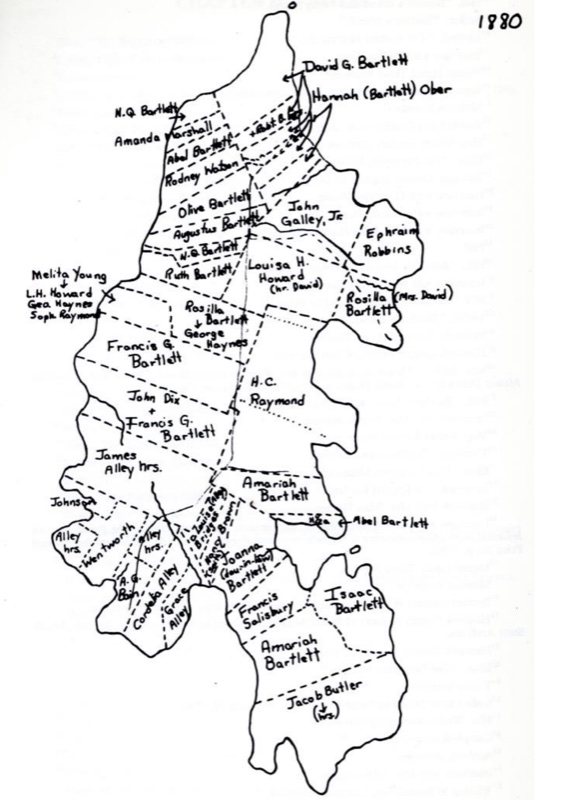
Frederick Jarvis Alley was born in 1828 on Bartlett's Island, a wind-swept fishing community in Frenchman Bay with only eleven households. His parents, James and Polly (Bartlett) Alley, had fifteen children. The island was named for Polly's grandfather, Christopher Bartlett, a Revolutionary War soldier who in 1775 became the first white settler on the island — arriving in a region that the Wabanaki Confederation had inhabited for thousands of years and from which they had only recently been driven by a series of brutal scalp-bounty proclamations issued by the Massachusetts colonial government.
Frederick grew up among Alleys and Bartletts on an island of fishermen. He did not inherit land — by the time his father died in 1857, he was one of twelve surviving children sharing a modest estate, and he sold his one-twelfth share to his brother James for $100 the same day he sold off a small farm he had been working on credit in Surry. He was twenty-eight, recently married, with no real capital and no clear path forward.
What he did have was a wife from one of the most prominent families on Mount Desert Island.
The Marriage of 1854
In 1854, Frederick Alley, twenty-six, married Irene O. Roberts of Eden. She was sixteen. He was the son of an island fisherman; she was the daughter of Tobias Roberts, who within a year would build the village's first hotel and who would die, by 1879, one of the richest permanent residents of Mount Desert Island.
The age gap and the class gap were both notable. Sixteen was young for marriage even in 1854 rural Maine, and the documentary record suggests the match was not what Tobias Roberts had in mind for his eldest daughter. The newlyweds did not settle in Eden near her family. They moved across the bay to Surry, where Frederick bought a small farm on credit and tried to make a go of it as a farmer. Two years later he sold the farm to his brother and moved on. For most of the next decade they lived in the town of Tremont, on the western side of Mount Desert Island near Frederick's Bartlett's Island roots, where he worked at various trades and they raised young children.
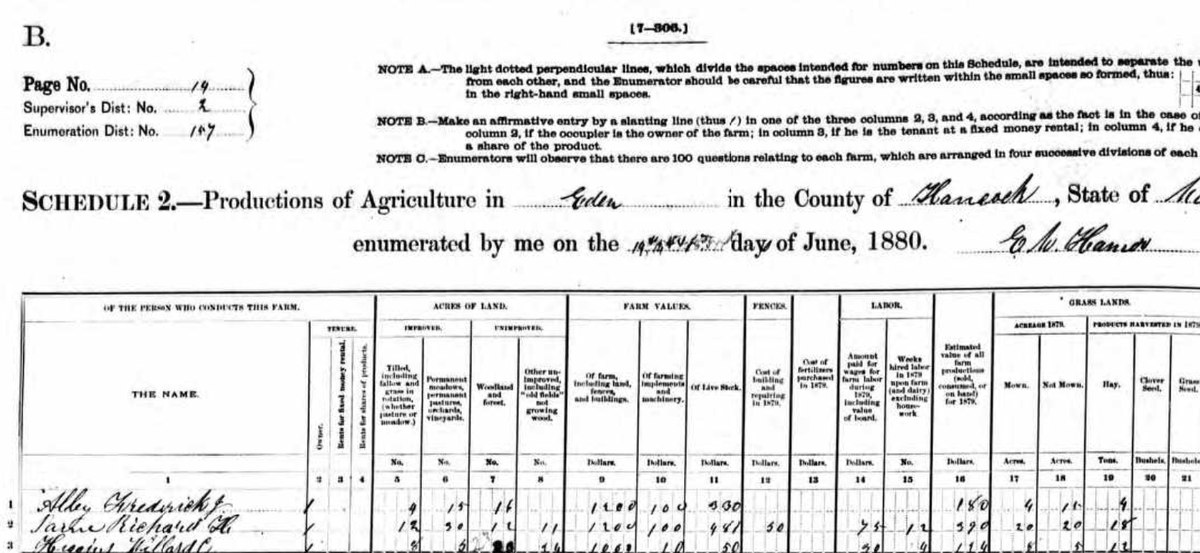
They had four children. Frank Orrin Alley was born in 1856, Ophelia W. Alley in 1859 (named for Irene's aunt), Albion P. Alley in 1861, and a youngest daughter, Aquaie J. Alley (also called Josephine), in 1866. The 1880 federal agricultural census still shows Frederick working land in Eden: four acres tilled, fifteen in pasture, livestock valued at $100, with a year's farm production of $480 — a working homestead, not yet a fortune.
The St. Sauveur Hotel
In 1870, Frederick and Irene returned to Bar Harbor. By that point Irene's father had been running the Agamont House — Bar Harbor's first hotel — for fifteen years. He had built the steamboat wharf in 1857, expanded it in 1867, and watched his small fishing village become a destination. Frederick, by all accounts, decided to follow his father-in-law into the hotel business.
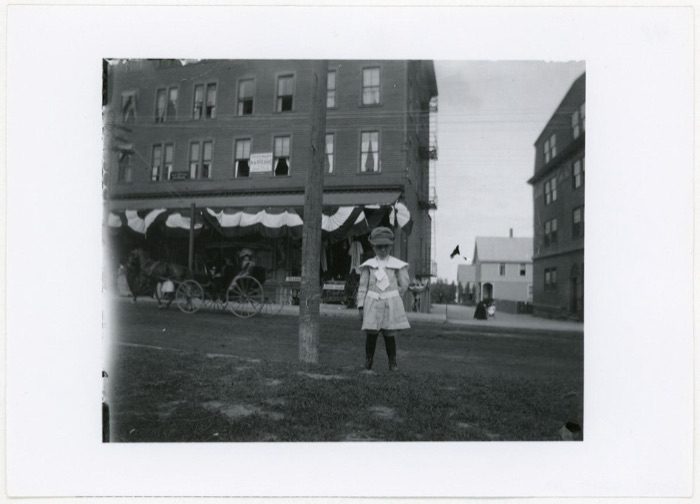
He hired John Clark, a prominent Bar Harbor builder, to construct the St. Sauveur Hotel on Mount Desert Street. The hotel was financed in part by an $896 mortgage to Nathan King of Lamoine, secured against fifty acres of Bar Harbor waterfront that Irene had purchased in 1867 in her own name. Five months later, in October 1870, King filed a writ of entry in the Supreme Judicial Court at Ellsworth to take possession of the mortgaged premises — a routine but ominous step that started a three-year statutory clock for the Alleys to redeem the loan. They did. The St. Sauveur opened, and it survived.
It became, in the words of its later promotional material, one of Bar Harbor's premier hotels for the summer elite. The original building burned in 1881 and was rebuilt the following year. The hotel remained in Alley family hands for seventy-five years.
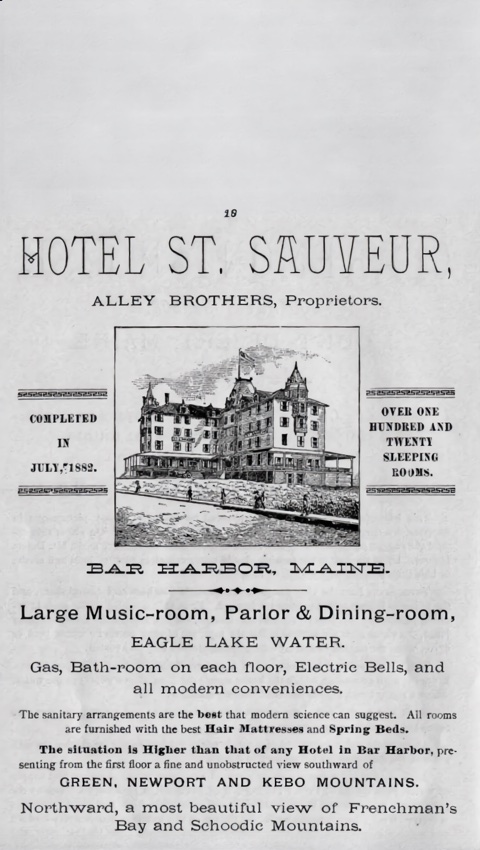
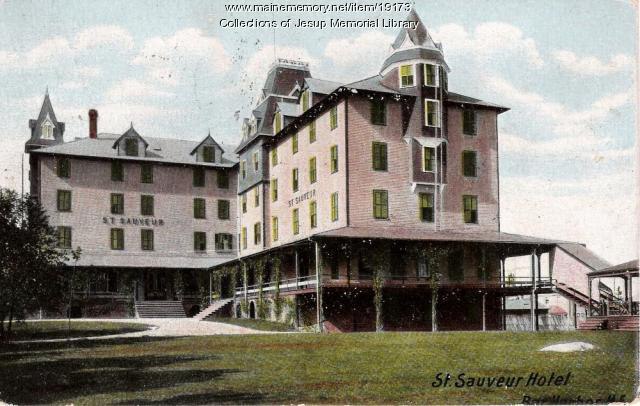
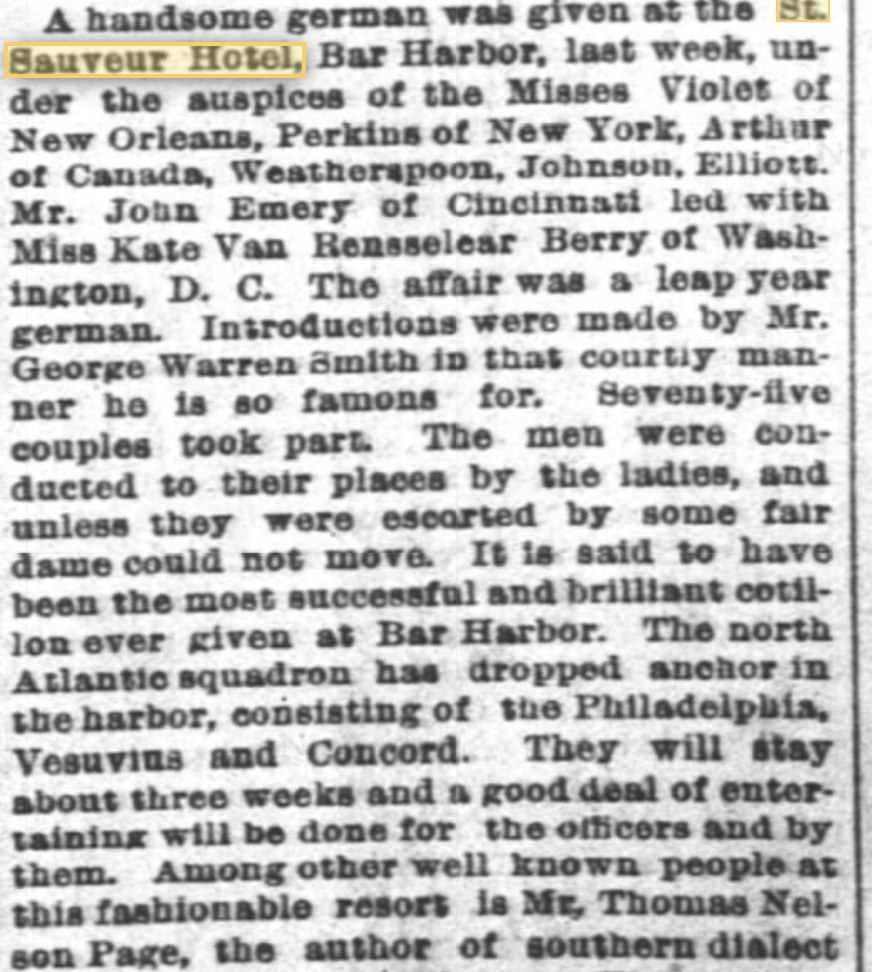
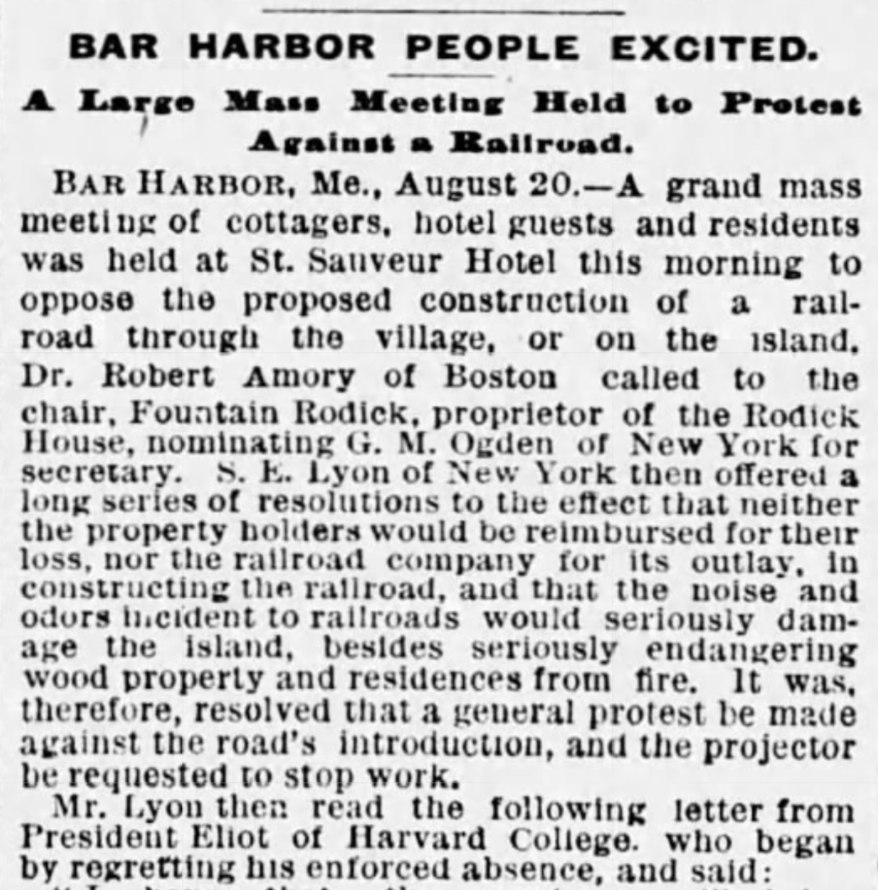
By the mid-1880s, the St. Sauveur was the kind of place where the political and social class of the entire eastern seaboard convened. In August 1888, when a railroad company proposed to extend tracks through Bar Harbor, the public mass meeting to oppose the project was held in the hotel's parlor. The chair was Dr. Robert Amory of Boston; Fountain Rodick, proprietor of the rival Rodick House, nominated the secretary; a letter from Charles W. Eliot, then president of Harvard, was read aloud. Charles How, "the largest landowner on the island," attended, along with a former president of the Philadelphia & Reading Railroad, the chief justice of the Maine Supreme Court, and "scores of ladies."

Frederick's Strained Relationship with His Father-in-Law Tobias
Whatever else may have softened in twenty-four years, Tobias Roberts never trusted his son-in-law with money.
This is not speculation. It is written into the last will and testament Tobias signed in August 1878, a few months before his death. In drafting bequests to each of his children, Tobias treated his two sons — Tobias L. Roberts and William M. Roberts — in conventional fashion: cash legacies of $2,000 each, plus operating businesses. Tobias L. received a Porcupine Island in Frenchman Bay; William received the Newport House hotel and the land beneath it.
For Irene, Tobias did something different. He left her more cash than either of her brothers — $4,000 — and an acre of land in Bar Harbor adjoining property already owned by Frederick. But every dollar and every square foot was placed inside a legal cage:
The language is technical, but the substance is not. Under nineteenth-century Maine law, a husband had certain claims on his wife's property — most importantly the right of curtesy, a life estate in his deceased wife's lands if they had had children. Tobias's clause shut all of that off. Whatever Irene received was hers alone. Frederick could not control it, could not pledge it as collateral, could not be reached by his creditors through it, and would receive none of it at her death. The phrase "or any future husband" anticipated even her remarriage. None of these protections were applied to either of Tobias's sons; their bequests were ordinary devises in fee simple. The shield was drafted to one threat profile, and Frederick was that profile.
Why Tobias felt this way is no mystery if one reads the documentary trail. He had watched, eight years earlier, as Frederick and Irene mortgaged Irene's fifty-acre waterfront parcel — adjacent to Tobias's own land — to a stranger from Lamoine for the construction money of the St. Sauveur. He had watched the lender take possession within five months. He had not intervened to redeem the loan. By the late 1870s, with the St. Sauveur successful and the Bar Harbor land boom underway, Tobias was generous enough to provide for his daughter handsomely. But the lesson he had drawn from 1870 was a permanent one: legal title in Irene's name was not, by itself, enough protection. Anything she received needed to be walled off.
It is a strange kind of forgiveness — one that comes with a deed of trust attached.
The Daughters
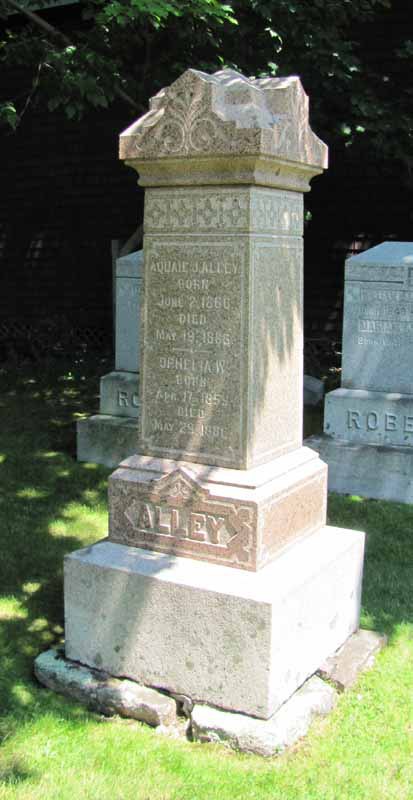
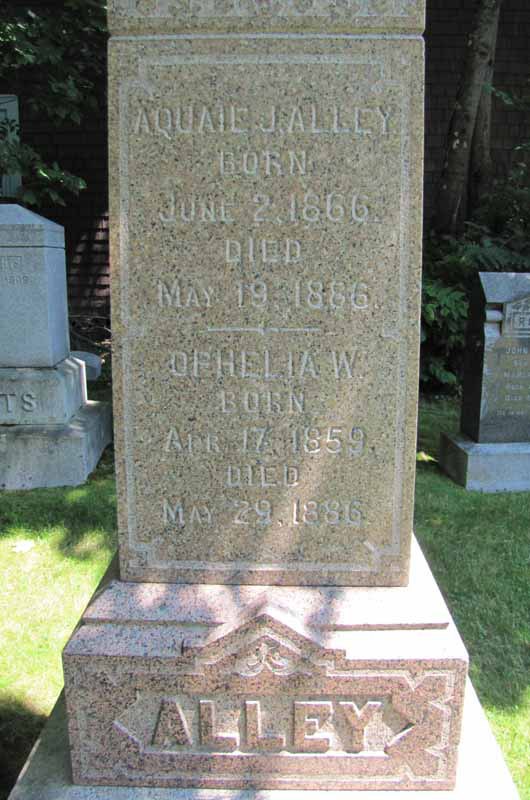
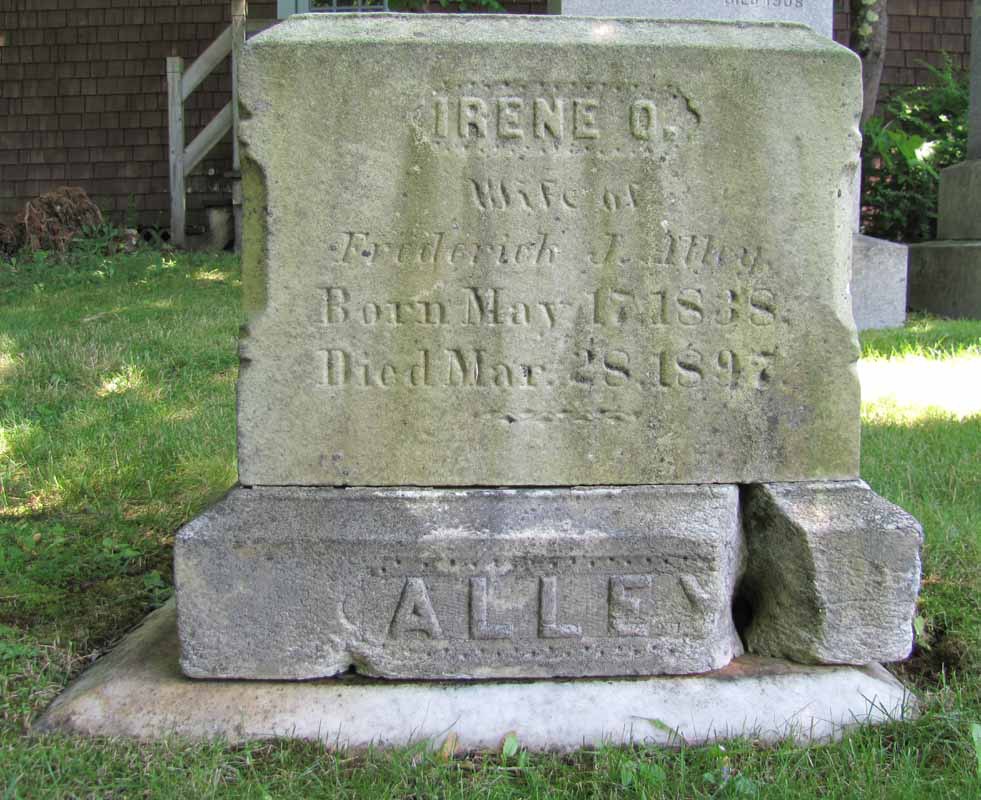
In May 1886, within ten days of one another, Frederick and Irene's two daughters died. Ophelia, who had worked as a waiter in her father's hotel and was twenty-seven, died on May 29. Aquaie, the youngest of the four children, was nineteen and died on May 19. The cause was not recorded on Ophelia's death certificate, but a diphtheria outbreak that spring is the most plausible explanation. Neither daughter had married.
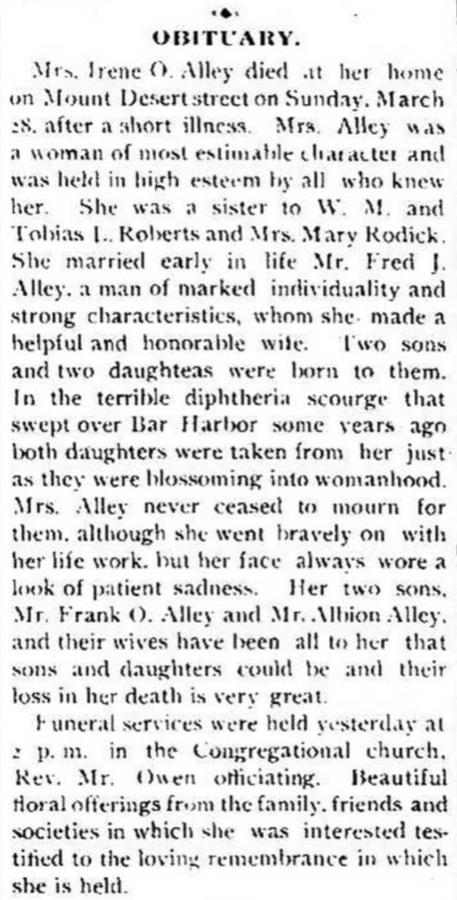
Their parents erected a single tall monument over them in Mount Desert Street Cemetery. Irene's obituary, written eleven years later when she died at fifty-eight of "paralysis," noted that "her face wore a look of patient sadness" attributable to the loss of her daughters.
"Capt. Frederick J. Alley"
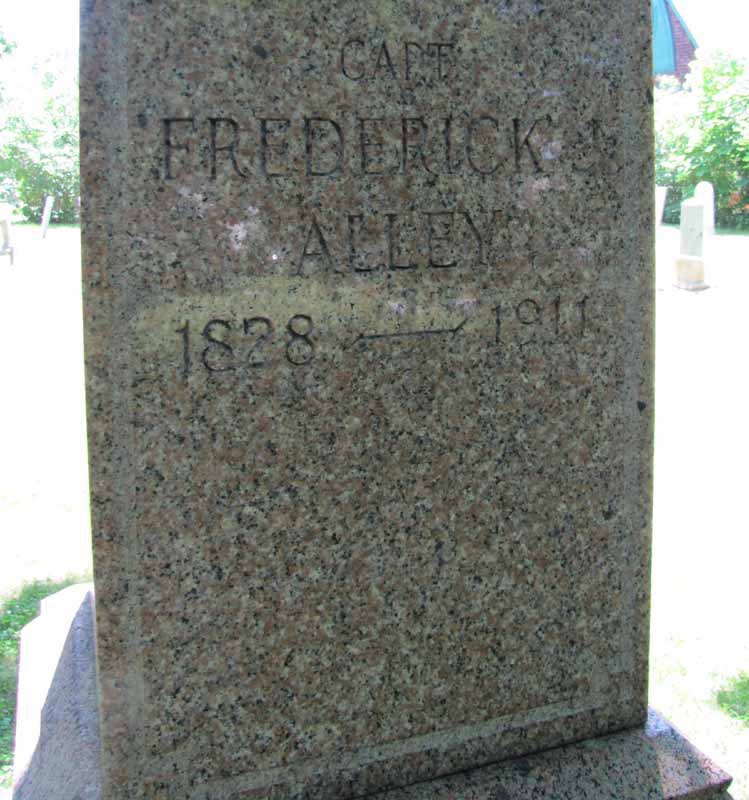
Frederick's gravestone in Mount Desert Street Cemetery is inscribed Capt. Frederick J. Alley, 1828–1911. His 1911 obituary describes him as having "in early life went to sea." The honorific shows up in nearly every printed reference to him from the last two decades of his life — on the deeds his sons would later sign, in society columns about hotel guests, on the monument his family raised after his death.
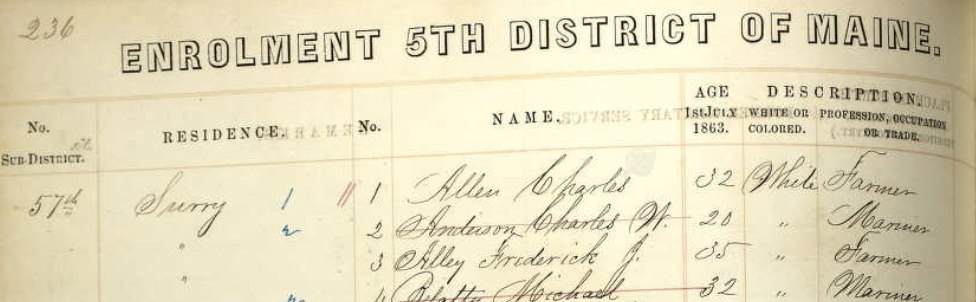
There is, however, no documentary evidence that Frederick was ever a sea captain. He does not appear in vessel enrollments in the Customs House records at Frenchman Bay. His own deeds, signed across decades, identify him as "Frederick J. Alley of Eden" or "of Surry" — never as a captain. The 1863 Civil War enrollment lists him as a farmer. The 1880 federal census lists him as a hotel keeper. The title appears, abruptly, in the historical record only as Frederick approached middle age and respectability — a self-furnishing typical of nineteenth-century New England, where a coastal upbringing could be stretched into a maritime title given enough decades and enough distance from the contradicting witnesses.
It is consistent with everything else in the documentary record about Frederick: a man who spent his life making himself into something he had not been born.
Politics and Side Ventures
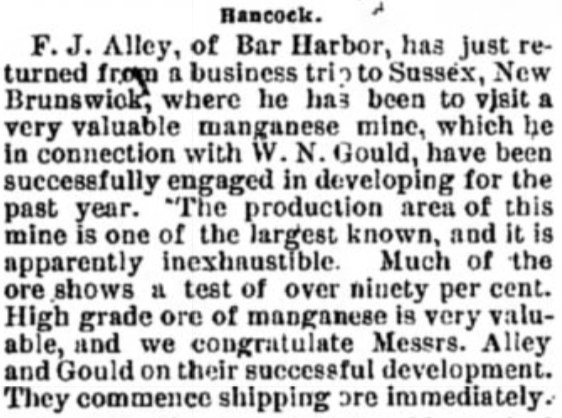
In addition to the hotel, Frederick pursued a series of investment schemes. In the 1880s he was involved with a manganese mine in Sussex, New Brunswick, with a partner named W. N. Gould. Later in life he sold shares of land in Blue Hill and bred and raced horses.
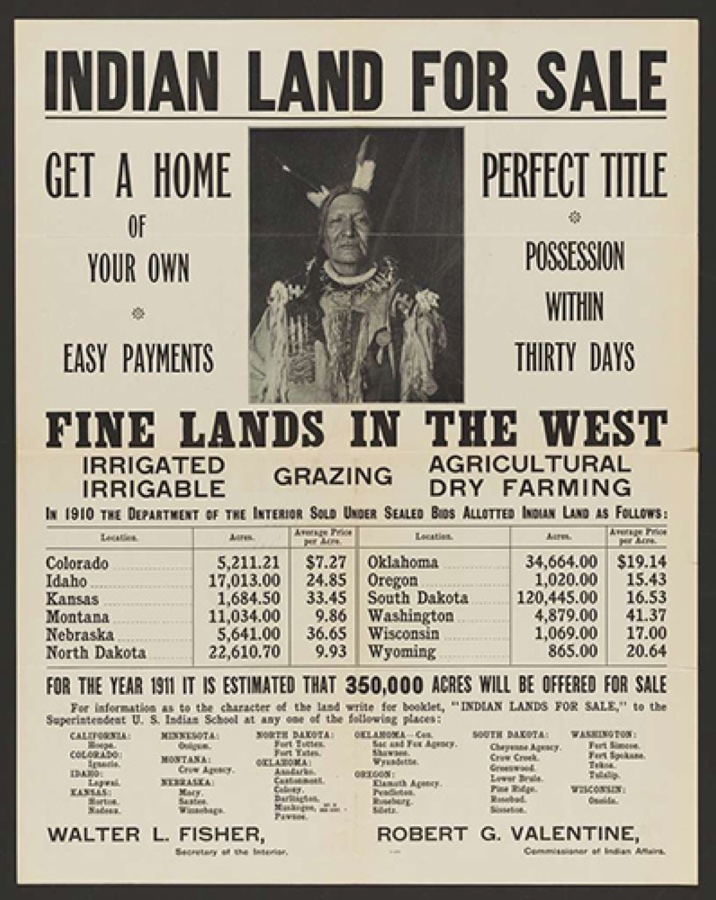
He was a conservative Democrat — the conservative party of the era — and an active supporter of Grover Cleveland in the bitterly contested 1884 presidential election. Cleveland's opponent, James G. Blaine, was a Maine man and U.S. Secretary of State; Frederick's choice to back Cleveland in his home state was a deliberate one. When Cleveland's narrow victory was confirmed, Frederick led a torch-lit parade from the St. Sauveur Hotel through Bar Harbor in celebration. Cleveland's administrations would go on to sign the Chinese Exclusion Act expansion (the Scott Act of 1888) and to implement the Dawes Act of 1887, which authorized the federal seizure of roughly ninety million acres of tribal land.
The Hotel After Frederick
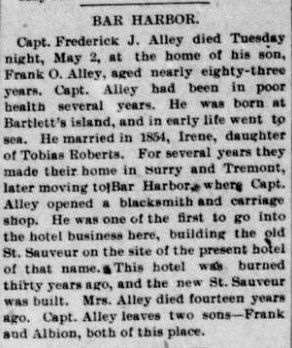
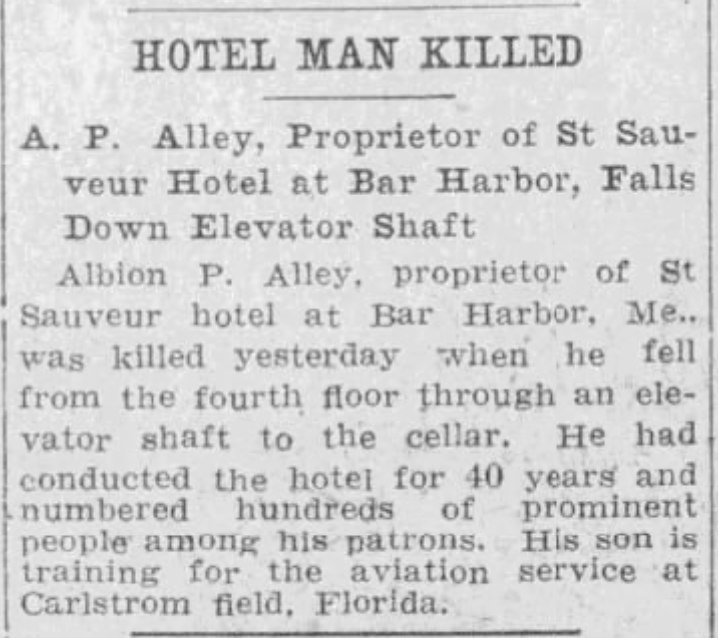
Frederick died on May 2, 1911, at the home of his son Frank, "aged nearly eighty-three years." His obituary in the Bar Harbor papers ran a single column. The St. Sauveur passed to his son Albion P. Alley, who ran it for forty years. In 1918 Albion died when he fell down an elevator shaft in his own hotel — from the fourth floor to the cellar. He had, the wire report noted, "numbered hundreds of prominent people among his patrons."
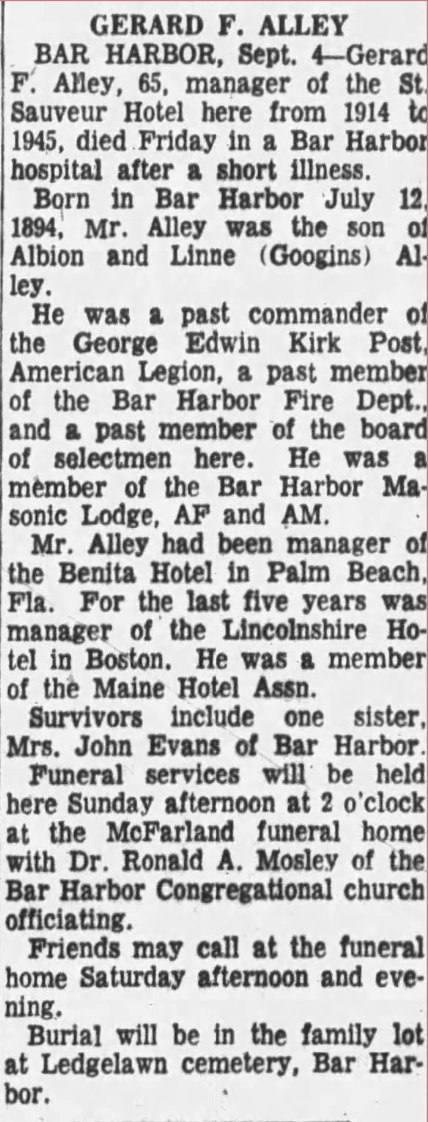
The hotel passed to Albion's son Gerard F. Alley, who ran it from 1914 to 1945. The original wooden structure was nearly lost in a 1925 fire that destroyed the adjacent Mt. Desert Inn and threatened the St. Sauveur. Gerard had no children. In 1945 he sold the hotel, and it was demolished. The St. Sauveur stood for seventy-five years.